

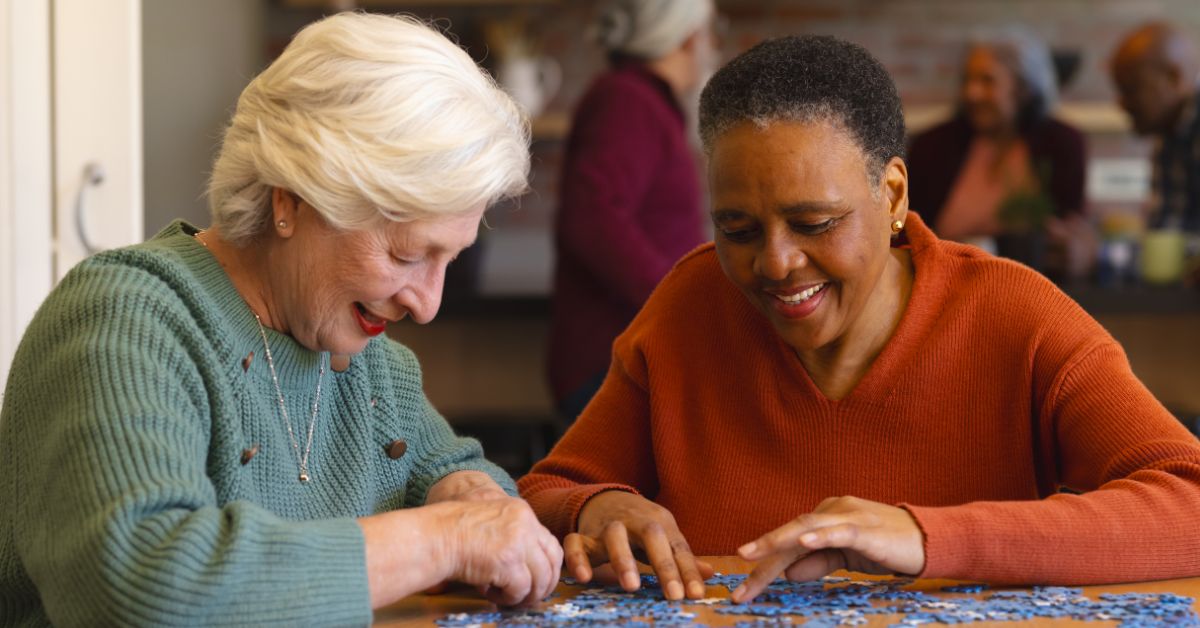
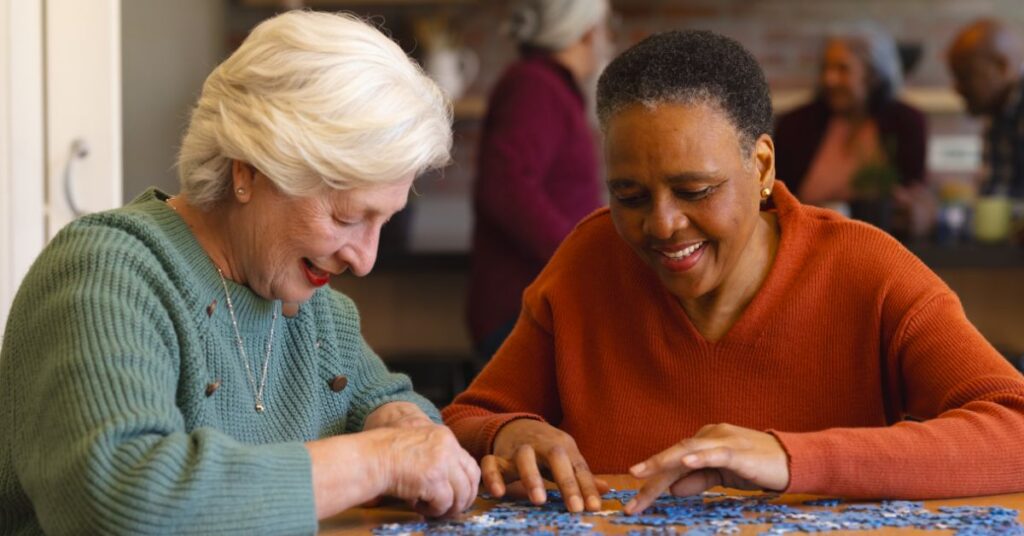
Good memory care in Eau Claire, WI, builds on what she can still do beautifully – whether that’s humming along to old songs, folding laundry with practiced hands or sharing stories from decades past. The truth is, your mom will likely keep more of herself than you might fear. Memory care at places like Heritage Court Eau Claire works with who she is right now, creating opportunities for her to feel successful and connected to what she’s always loved.
Here’s what might surprise you: quality memory care doesn’t take away those moments of joy and connection. Instead, it creates more opportunities for them. They design their entire approach around what your mom can still do and love, not what she’s struggling with.
This article will show you how the right memory care keeps your mom engaged with the activities and relationships that make her who she is – today, tomorrow and in the months ahead.
Learn More About Our Memory CareWhat Approach Does Memory Care Use to Support Seniors With Dementia?
Memory care uses a strength-based, person-centered approach that focuses on what residents can still do rather than what they’ve lost. This means building daily activities around preserved abilities, lifelong interests and remaining skills instead of dwelling on cognitive decline.
When her strengths take center Stage
Strength-based dementia care (National Academies of Sciences, Engineering and Medicine et al., 2021) means staff see those moments of capability, not the struggles. The team at places like Heritage Court asks a different question each morning: “What can your mom accomplish today?” instead of making lists of what’s become difficult.
Your mom is still so much more than her diagnosis. A woman who taught school for thirty years might stumble over yesterday’s conversation, but watch her face light up when she reads to a group of children. Someone who spent decades in her kitchen might not remember this morning’s breakfast, but her muscle memory guides her hands as she kneads bread dough.
Building up instead of managing down
Here’s where memory care gets it right: they don’t try to fix what’s broken or bring back who your mom used to be. Instead, they help her be exactly who she is today.
Traditional medical approaches focus on loss and limitation. Memory care focuses on possibility and connection. When your mom can’t remember how to start a conversation, staff members don’t see that as failure—they see an opportunity to connect through music, touch or shared activities she can enjoy right now.

The Beautiful Truth: Your Mom Still Has So Much to Give
Here’s something that might surprise you: memory care programs help her rediscover parts of herself you thought were gone. The best communities ask families to share everything about who she’s always been. Her love of baking. The way she hums while gardening. How she lights up talking about her grandchildren.
When yesterday’s skills become today’s comfort
Staff create spaces that feel like home from decades past. That former postal worker? She finds peace stamping envelopes again. Your mom, who spent years perfecting her pot roast? She can still help prepare those same family recipes, her hands remembering every step.
The songs she still remembers
You know how your mom’s face changes when her favorite song comes on? Music therapy reduces agitation and brings back memories you thought were lost. Communities create playlists filled with the music from her youth—those songs that make her smile and sometimes even sing along.
Musical memories stick around longer than almost anything else. Even when other memories fade, the melody of her wedding song or her favorite hymn often remains crystal clear.
Art becomes another way for your mom to express herself when words feel hard to find. The process matters more than the final painting. It’s about giving her hands something familiar to do and her heart a way to speak.
Movement that feels good
Your mom can still enjoy walking on garden paths designed just for her. Raised flower beds let her tend plants without strain. Chair yoga gives her gentle movement even on harder days. The goal isn’t to keep her sedentary. It’s finding ways for her body to feel strong and useful.
The Support She Deserves
Memory care doesn’t mean giving up the person your mom has always been. In fact, quality communities like Heritage Court Eau Claire help her stay connected to the activities and interests that define her. You can explore how person-centered care keeps your mom engaged with what she loves by calling (715) 831-8200. This decision focuses on her remaining strengths and joys, not her limitations, giving you both the support you deserve.
Schedule a Tour NowFAQs
Q1. How does music therapy actually help someone in memory care?
Music can be incredibly powerful. Familiar songs often bring back memories, ease agitation and help improve mood and focus. Even when other memories fade, musical memories tend to stick around longer, which is why you’ll often see residents light up or relax when they hear music they recognize.
Q2. What kind of training do memory care staff members usually have?
Most memory care staff go through specialized dementia training that covers things like communication, behavior support and person-centered care. This can range from a few hours to more in-depth programs. Many communities also have leaders with advanced certifications, so there’s a strong understanding of how to support residents at different stages.
Q3. How can I stay involved in my loved one’s care?
You’re an important part of the care team. Families are usually included in care plan meetings and can share insights about preferences, routines and what brings comfort. Many communities also connect families with support groups and resources, so you have guidance and support along the way.