

The best assisted living in Muskego, WI, protects your mom without turning her life into a surveillance system. When you tour communities, ask how they handle falls and whether they use privacy-respecting sensors or invasive cameras.
Here’s what’s different at Heritage Muskego: smart sensors that monitor without watching, detect problems without buttons and alert staff instantly when help is needed. Think of it as a net that actually works – one that lets both of you sleep better at night.
Let’s walk through how this technology actually protects your mom and why families are choosing it over the old ways of “keeping an eye on things.”
Learn More About Our TechnologyWhat is ‘Smart-Sensor’ in Senior Living? Can it actually Prevent Falls or is it Just a Gimmick? I Need the Absolute Best Assisted Living
Smart-sensor isn’t another marketing gimmick – it’s small devices placed quietly around her living space that learn her daily patterns without watching her. These sensors track how she moves, when she sleeps and her normal routines, but they never record images or sounds. They simply learn her rhythm.
Privacy-first sensors vs intrusive cameras
The difference matters more than you might realize. Cameras capture everything – Mom getting dressed, using the bathroom, every vulnerable moment stored somewhere as video footage that someone reviews later.
Sensors work like smart light switches that understand patterns. When Mom walks to the bathroom at night, the sensor notices movement in that direction. It doesn’t see her nightgown or worried expression. It just knows someone moved from the bedroom to the bathroom.
How predictive analytics detect fall risks before they happen
The system learns Mom’s normal patterns over time. She gets up twice per night. Takes like 30 seconds to walk from the bedroom to the bathroom. Sits in her favorite chair for 20 minutes after breakfast.
When patterns change, staff get an early warning. Six bathroom trips instead of two might signal a urinary tract infection before it causes a fall. These early alerts let caregivers step in during the warning phase, not the emergency phase.
Why your mom won’t need to wear a fall button anymore
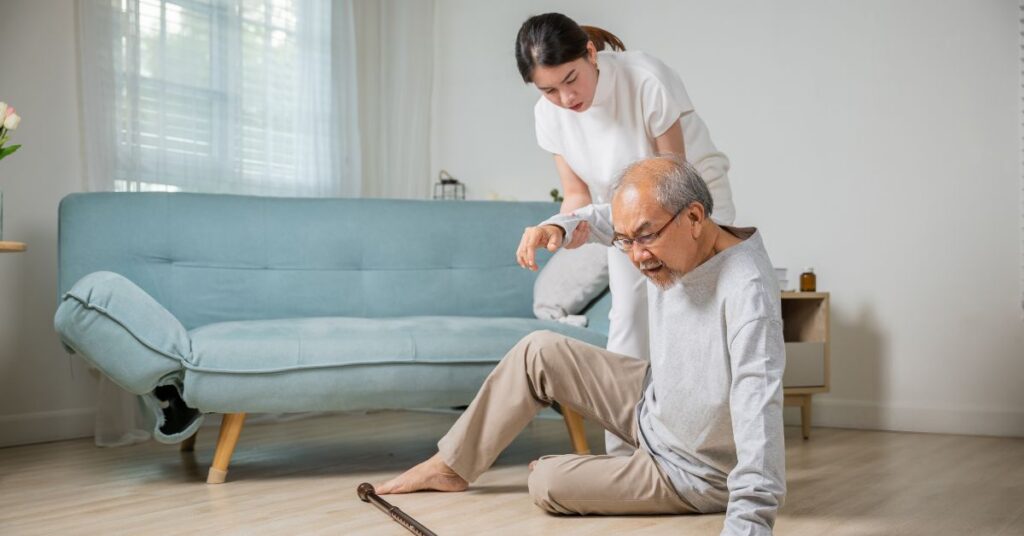
Fall buttons fail for one simple reason: they require action during an emergency. Mom must stay conscious, reach the button and be willing to press it. Stubborn mothers who don’t want to “bother anyone” leave buttons sitting on nightstands.
Sensors solve this completely. When the system detects a fall through sudden position change or when Mom stays down too long, it alerts staff automatically. Mom doesn’t press anything or call anyone.
How Can I Trust a Machine More Than I Trust My Own Eyes?
Your hesitation makes complete sense. Trusting technology with your mom feels like giving up control when you’re already stretched thin. You want to know exactly what’s happening and how it works before you let go of that worry.
Understanding how motion pattern detection works
The sensors work differently than you might imagine. Accelerometers inside fall detection devices measure movement across three axes: right-left, forward-backward and up-down. These sensors register the unique signature of a fall through specific motion patterns: sudden weightlessness, jarring impact and prolonged horizontal positioning. The technology distinguishes a fall from taking items off shelves or walking downstairs.
What matters most: motion sensors detect presence and movement patterns without capturing images of your mom getting dressed or using the bathroom. They understand motion, not moments.
What happens when a sensor detects an emergency
When the system identifies a fall, help comes quickly. Blurred footage is reviewed remotely by trained experts without any personal identifying information attached. Once verified, care teams receive notification within 60 seconds via text, call or email. Staff can then view clear footage to determine exactly how the fall occurred and communicate accurately with families.
The human + technology partnership in senior living
Here’s what eases most families’ minds: sensors don’t replace caregivers. They free them up to do what technology can’t do – hold your mom’s hand, listen to her stories, help her feel less alone.
Technology handles the constant watching while staff focus on personal care and relationship-building (Nobbmann et al., 2022). When alerts arrive, trained professionals assess the situation and respond appropriately. One caregiver can effectively monitor multiple residents without losing the personal touch that matters.
Peace of Mind
Smart-sensor technology monitors without watching, protects without invading and alerts without waiting for her to press a button. Above all, it gives you both permission to rest. The 2:00 AM phone checks can stop. Heritage Muskego offers this technology right here in Muskego, WI. Call (414) 425-7155 to schedule a tour and see how privacy-first sensors create the net you’ve been searching for.
Schedule a Tour NowFAQs
Q1. What kind of technology can help me keep an eye on my aging parent from a distance?
There are a lot of helpful tools out there, depending on what you need. Many families use smart speakers like Amazon Echo or Google Nest Hub for easy communication, along with devices like the Apple Watch for fall detection. There are also simplified tablets like GrandPad, automatic medication dispensers, video doorbells and even smart thermostats. Some newer hearing aids can track health data too.
Q2. Are smart sensors a better option than cameras for privacy?
For many families, yes. Smart sensors can track movement and activity patterns without recording video or images. That means your parent still has their privacy, especially during personal moments, while you can still get a sense of their daily routine. It’s a more discreet way to monitor well-being without feeling intrusive.
Q3. How quickly does someone respond if a fall is detected?
Most systems are designed to alert caregivers very quickly—often within about a minute. Notifications can go out through text, calls or email, so someone can check in right away. Many of these devices are highly accurate, which helps ensure your parent gets timely support when they need it most.