



You’re not losing your mind and you’re not failing your parents. Those impossible evening hours have a name and there are real ways to bring back moments of peace at our memory care in Port Washington.
You’re not giving up on your parent by choosing memory care. You’re choosing specialized support that can honor their dignity while prioritizing their well-being during those vulnerable hours when your love alone isn’t enough.
Finding relief from sundowning starts with compassionate memory care at Lincoln Village. Through familiar traditions, calming routines and personalized support, families can ease evening anxiety, restore peace of mind and help their loved ones feel comforted and truly cared for.
Learn More About Our Memory CareHow Do I Know if it’s Finally Time for Memory Care? Mom is Getting so Confused and I’m Scared to Leave Her Alone for Even Five Minutes
You watch her pace at 6 PM every evening, asking where Dad is, even though he passed five years ago. Your hands shake when you leave for the grocery store or when you’re wondering if she’ll wander outside . This isn’t the occasional forgetfulness everyone warned you about. This is watching someone you love slip away while you’re drowning in exhaustion and fear. If you’re here reading about memory care communities, you’re not giving up on her. You’re recognizing that love sometimes means getting help.
When does home care stop being enough?
When you’re afraid to shower because she might leave the house or when you find her trying to cook at 3 AM, home care has shifted from challenging to dangerous. You can’t be awake 24 hours a day. More importantly, you deserve sleep without fear. Memory care provides trained eyes on your mom around the clock, especially during those difficult evening hours when confusion peaks.
This guilt is eating me alive – is that normal?
Every daughter asks this exact question. The guilt sits heavy in your chest, but here’s what matters most: you’re choosing professional support because you love her, not despite loving her. Guilt often means you care deeply, not that you’re making the wrong choice.
Once you make the brave decision to ask for help, you’ll find that good memory care doesn’t rely on heavy medications to ease those hard evenings—instead, we rely on the things they already love.
Why Your Dad’s Favorite Patriotic Songs Might Be the Key to Calmer Evenings
Those songs from his youth aren’t just background music. When your father hears Glenn Miller’s big band or your mother sees those Memorial Day flags you hung every year, something magical happens. Her face softens. His restless pacing stops. These familiar traditions reach places that evening medications simply can’t touch.
The music that made them who they are still works
Your father might forget your name some days, but watch his fingers start tapping when “In the Mood” plays. Musical memories stay strong even when everything else fades, stored in brain regions that dementia affects last. The songs from their teens and twenties – those formative years between 10 and 30 – create the strongest emotional responses.
In fact, a 2013 clinical study found that music therapy significantly reduces evening agitation (Ridder et al., 2013). with caregivers noting calmer moods that last well beyond the songs themselves. That’s not a coincidence. It’s your parents’ brain finding comfort in the soundtrack of their happiest memories.
Simple holiday touches can quiet the confusion
Sometimes, a small American flag on the table or a few photos from past Memorial Day gatherings can provide just enough familiarity to ease anxiety. These visual cues give your parent’s mind something recognizable to hold onto. Simple, calming decorations work better than overwhelming displays, evoking positive memories without creating sensory overload.
The comfort of familiar flavors
Bring that potato salad recipe she perfected for every Memorial Day barbecue. Traditional foods create joy even for parents who rarely speak anymore. Familiar tastes and smells awaken pleasant memories and genuinely improve well-being.
Why these moments matter so much
When evening confusion peaks, multisensory experiences through familiar sights, sounds, smells and tastes significantly reduce agitation and depression. These aren’t just nice gestures. There are non-verbal ways to reach your parent when regular conversation becomes impossible.
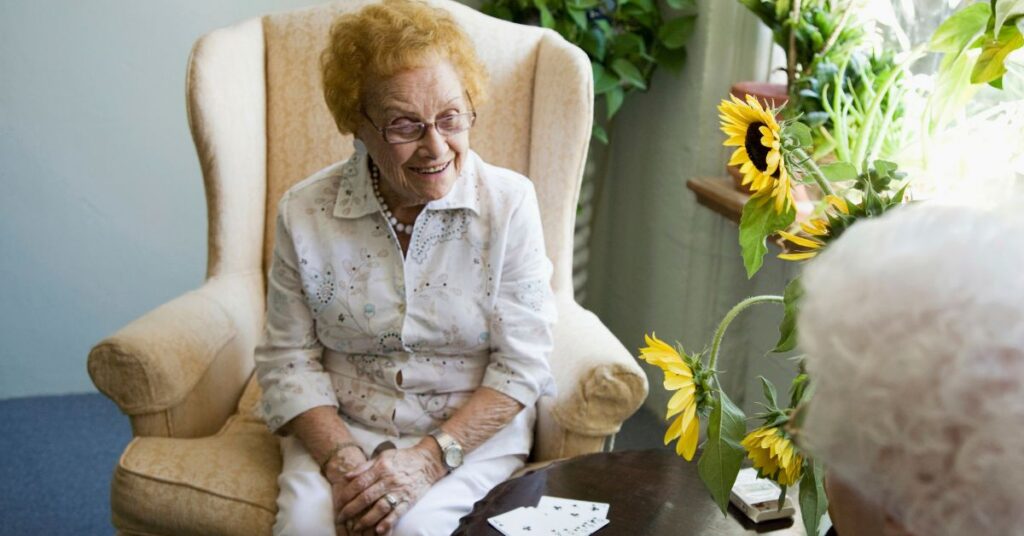
What Will Those Hard Evening Hours Actually Feel Like for Mom at Lincoln Village?
You walk through the doors at 5 PM, expecting that sterile nursing home smell and residents parked in wheelchairs staring at nothing. Instead, you hear Glenn Miller playing softly while staff members sit beside residents looking at photo albums together. Your mom won’t be forgotten in a corner during her most difficult hours.
Can I still be part of her life and routines there?
You can absolutely join her for Memorial Day celebrations, bring her famous apple pie or sit together during music time. The staff wants you there because familiar faces make everything less scary for her. Your presence during those evening hours when she needs comfort most helps her feel anchored instead of lost.
Prioritizing Your Loved One
Choosing memory care doesn’t mean you’ve failed. Actually, it means you recognize that love sometimes requires professional hands to provide the comfort your parent deserves during those difficult evening hours. Lincoln Village understands how traditions and familiar rituals can calm sundowning anxiety. When you’re ready, call Lincoln Village at (262) 268-1300 to schedule a tour or simply talk things through. You don’t have to carry this alone—we’re here to help you and your parent move forward with confidence.
Schedule a Tour NowFAQs
Q1. How does Lincoln Village help reduce sundowning symptoms in the evening?
At Lincoln Village, the focus is on creating a calm, structured environment as the day winds down. Evenings are thoughtfully designed with soft lighting, reduced noise and soothing, staff-guided activities to help residents feel more at ease. Instead of the unpredictability that can happen at home, residents benefit from a consistent routine and a supportive setting that helps minimize confusion and agitation.
Q2. Can a memory care community prevent sundowning from happening?
Sundowning can’t be fully prevented, but Lincoln Village is set up to reduce how intense it becomes. The team uses consistent daily schedules, proactive evening routines and a carefully managed environment to limit common triggers. With trained staff available and a setting built around comfort and familiarity, residents often experience more manageable evenings compared to less structured environments.
Q3. How do activities help with sundowning?
Lincoln Village offers familiar, engaging activities that are intentionally scheduled to support residents during the late afternoon and evening. These might include music programs, reminiscence activities or small-group interactions that feel comfortable and recognizable. Because these experiences are guided by trained staff in a community setting, they provide both emotional reassurance and a sense of connection—helping residents stay grounded during more challenging times of day.