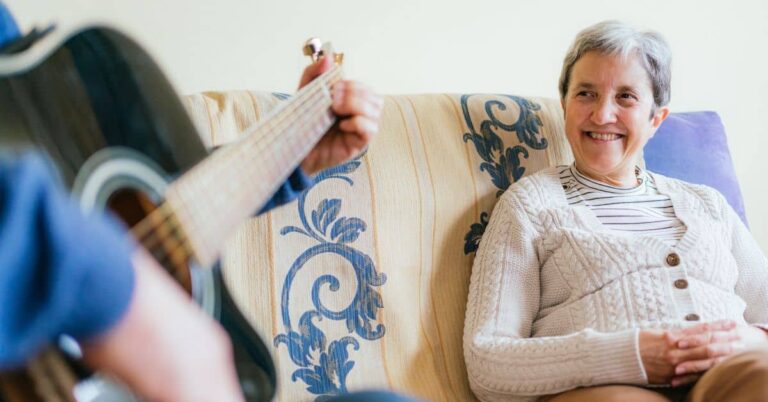

Music therapy offers memory care in Pewaukee, WI, a gentle, drug-free way to ease those difficult evening hours while preserving residents’ dignity. When residents sing along, they activate brain areas that dementia struggles to touch, creating far better results than simply playing background music.
This approach gets to the heart of what’s really causing evening agitation, without the dangerous side effects that come with pharmaceutical solutions. Both residents and their caregivers discover a gentler path toward peaceful evenings.
Ease sundowning symptoms at memory care in Pewaukee, WI, with SingFit’s therapeutic music platform. This guide explains how active singing redirects anxious energy and elevates mood using non-pharmacological tools. Replace heavy sedatives with familiar melodies to improve well-being and restore peace during challenging evening hours for your loved ones.
What is the Best Way to Handle Sundowning in Memory Care Without Using Heavy Sedatives?
The clock shows 4 p.m. and something shifts. Residents who seemed settled just an hour before now wander the halls with purpose but no clear destination. Voices carry notes of worry and that familiar tension spreads from room to room like ripples in still water. Clinical guidelines recommend nonpharmacologic interventions(Brasure et al., 2016)as the first choice for managing agitation and aggression in dementia patients.
Learn More About Our Care OptionsWhy music reaches places other treatments cannot
Something remarkable happens when familiar melodies play for people living with dementia. Music finds pathways in the brain that remain untouched by the disease’s progression. Listening to personally meaningful songs activates the visual network, salience network, executive network and cerebellar regions, causing whole brain areas to communicate. The caudal anterior cingulate cortex and ventral pre-supplementary motor area, which encode long-known music, remain among the last brain regions to degenerate in Alzheimer’s disease.
This explains the beautiful moments when someone who struggles with their own name can sing every word of a childhood lullaby. Musical memory travels different roads—ones that stay clear even when other paths become blocked.
A gentler path than medication
Too many people with dementia carry heavy medication burdens. Music offers a different way forward. Personalized music programs are associated with reduced use of antipsychotic and sedative medications among nursing home residents with dementia. The approach works simply: notice what sparked the restlessness (noise, tiredness, unfamiliar faces), choose a song from their younger years (typically ages 15-25), then invite them to join in through singing or gentle movement. This redirect-and-elevate method addresses the heart of the problem rather than masking symptoms with drugs.
SingFit’s Approach: Making Familiar Music Work as Medicine
Redirecting restless energy through musical connection
The platform pairs music therapist protocols with a lyric prompting system that removes the pressure of remembering words while keeping residents actively involved. Picture this: when a resident starts showing restlessness, the caregiver chooses a song from their past. The lyrics appear on screen with gentle prompts, taking away the struggle to recall words while preserving the joy of singing together.
Why singing beats just listening
Active participation separates real therapy from background noise. Comparing active engagement with passive listening reveals something fascinating: children who participated in music classes showed greater improvements in brain processing for speech and reading than those who just listened. The same principle applies here. When residents sing rather than simply hear music, they activate motor planning, language centers and emotional processing all at once. This full-brain involvement creates outcomes that passive listening simply cannot match.
The science behind feeling better
Something beautiful happens when people sing together. The act releases oxytocin, known as the bonding hormone, which builds trust and connection between people. Group singing sessions showed increased salivary oxytocin levels in participants, connecting directly to improved well-being. Music also triggers dopamine release in the brain’s reward centers, producing natural feelings of pleasure and motivation. These chemical changes explain why residents often seem more peaceful and socially engaged during and after singing sessions.
Choosing songs that matter most
Songs from ages 10 to 30 work best for reducing agitation and bringing back positive memories. This “musical prime” represents when songs embed deeply in long-term memory and connect to life’s formative experiences. A resident born in 1945 responds most strongly to music from 1955 to 1975. SingFit’s database helps caregivers find the right songs quickly, maximizing both emotional impact and therapeutic benefit.
A Better Approach
Active participation in music therapy offers your memory care community a better alternative to heavy sedation. When you apply the three-step redirect protocol consistently, residents experience fewer episodes of late-day agitation while maintaining their dignity and connection to joyful memories. Above all, this approach addresses root causes rather than merely suppressing symptoms. Contact Heritage Court Waukesha at (262) 542-3434 to see how therapeutic singing transforms the atmosphere during those challenging evening hours.
Schedule a visitFAQs
Q1. What is sundowning in dementia and when does it usually happen?
Sundowning is a common symptom in people with dementia where confusion, agitation, anxiety or restlessness increases later in the day. It typically occurs in the late afternoon, evening or nighttime hours, often beginning around 4 p.m. and becoming more noticeable as daylight fades. Sundowning is most common during the middle and later stages of dementia and the change in lighting and daily routine can make symptoms more pronounced.
Q2. Why does music help calm people with dementia?
Music can be very powerful for people with dementia because the brain areas that store musical memories often remain intact longer than those responsible for language or short-term memory. When someone listens to or sings familiar songs, it activates several parts of the brain at once and can trigger the release of feel-good chemicals like dopamine and oxytocin. These neurochemicals promote feelings of calm, pleasure and connection, which can help reduce agitation and anxiety.
Q3. What kind of music works best for someone with dementia?
Music from a person’s younger years usually works best, especially songs from when they were between about 10 and 30 years old. This time is often called a person’s “musical prime,” when music becomes closely tied to important life experiences and memories. Because these songs are deeply stored in long-term memory, they are more likely to trigger recognition, emotional comfort and positive engagement.