
Social singing circles address isolation in senior care in Brookfield, WI, settings by shifting residents from passive observation to active participation, fostering real connections through shared musical moments. When residents face each other directly, eye contact and closeness develop naturally—something traditional entertainment arrangements simply can’t achieve.
Success depends on establishing spaces where each resident contributes according to their current abilities—whether singing, humming or moving to rhythm. When facilitated thoughtfully, these circles connect residents to preserved memories and create meaningful social bonds.
Combat social isolation within senior care in Brookfield, WI, through the power of Social Singing Circles. This evidence-based approach uses guided, active participation to engage lower-functioning residents, releasing oxytocin and stimulating protected brain regions. Transform passive observation into meaningful community connection and cognitive engagement for your loved ones today.
What is a Social Singing Circle and How Does it Work in Senior Care?
Social isolation touches millions of seniors, even those who receive excellent care in communities like Brookfield, WI. Social singing circles address this challenge through a different approach than typical entertainment programming. Rather than watching performers, residents become active creators of music together.
Learn More About Assisted LivingThe core elements of social singing circles
Picture residents seated in a circle, each person able to see everyone else’s face. This simple arrangement changes everything. The focus shifts from performance quality to participation itself. Care staff have shared stories about these sessions where residents sing along, answer questions about songs or pick up simple instruments.
The eye contact and closeness that circle seating provides cannot happen with traditional room arrangements. This physical setup strengthens the feeling that everyone shares in creating something together. Songs get taught through call-and-response patterns or simple repetition, which helps residents with difficulties join in.
How social singing circles differ from traditional sing-alongs
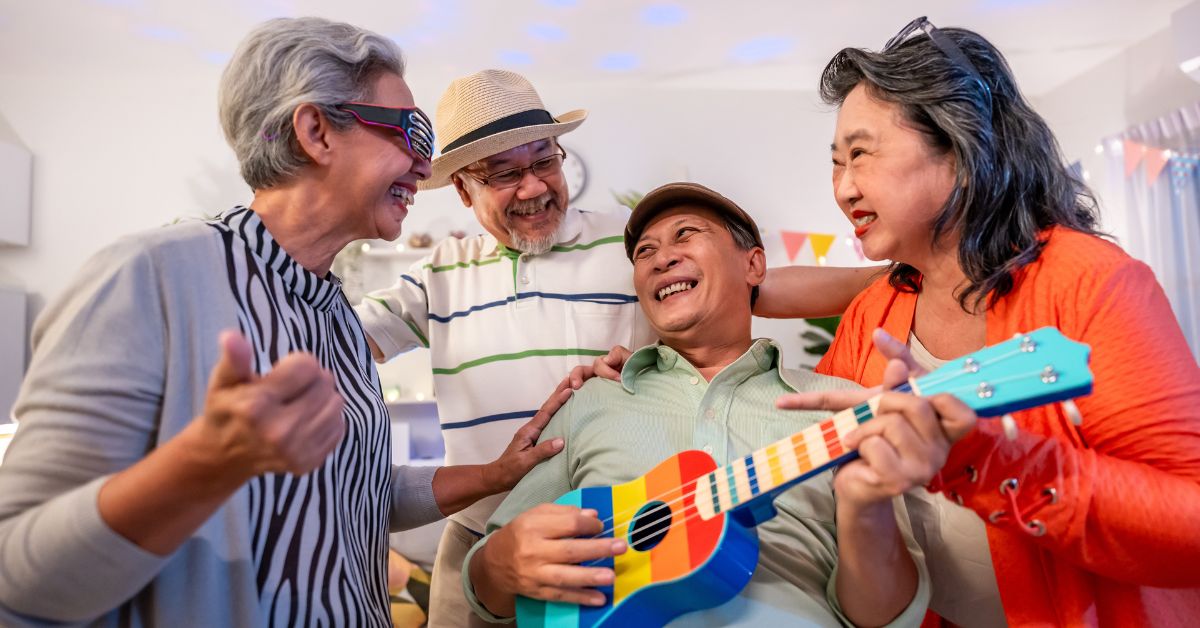
Most sing-alongs feature someone performing at the front while residents sit and listen. Social singing circles work differently – they remove the performer-audience separation completely. These circles need facilitation, not performance. The person leading guides everyone’s participation, teaches song parts and draws vocal contributions from each member. Unlike concerts, where musicians come to entertain, circle sessions involve residents actively making music together through singing, instruments and moving in rhythm.
Why music creates instant community
Something remarkable happens when people sing together. Group singing releases oxytocin the hormone that creates bonds between people (Ruiz & Pitts, 2025). Music reaches multiple brain areas at once, touching auditory processing, emotions, movement and memory all together. These connections work even when other thinking abilities struggle. Familiar melodies provide a framework that helps people participate without needing to consciously remember words or notes.
The Science Behind Connection: What Happens When We Sing Together
Brain scans show us something beautiful about singing circles. When residents join voices together, their brains light up. Music doesn’t just play in one corner of the mind—it awakens entire networks that work together to create connection.
Why music reaches every part of the brain
Music listening engages the auditory cortex, motor regions, limbic system structures and memory centers. Think of it like a conversation between different brain areas. The auditory cortex hears the melody first, then sends that information to the hippocampus and cingulate gyrus. But the brain doesn’t stop there—it creates feedback loops, sending information back the other way too. This rich back-and-forth creates neural processing that simple listening activities just can’t match.
When residents actually sing together, something even more remarkable happens. Their brains recruit the primary motor cortex, supplementary motor areas, basal ganglia and cerebellum. The integration spreads across sensory-motor processing, cognitive functions, memory systems and emotional responses. Brain imaging reveals activation stretching from the temporal lobe all the way to the inferior frontal gyrus during musical activities.
Why musical memories survive when others fade
Here’s what gives families hope: musical memory stays remarkably strong. These same regions also process the emotions that music brings up, which explains why residents react emotionally to familiar songs even when other memories have faded. The auditory areas, sensorimotor cortex and supplementary motor areas stay largely protected. This preservation creates a doorway—residents can still reach musical memories when everything else feels locked away. Singing activities engage these protected brain regions, offering cognitive stimulation that works around damaged pathways instead of fighting through them.
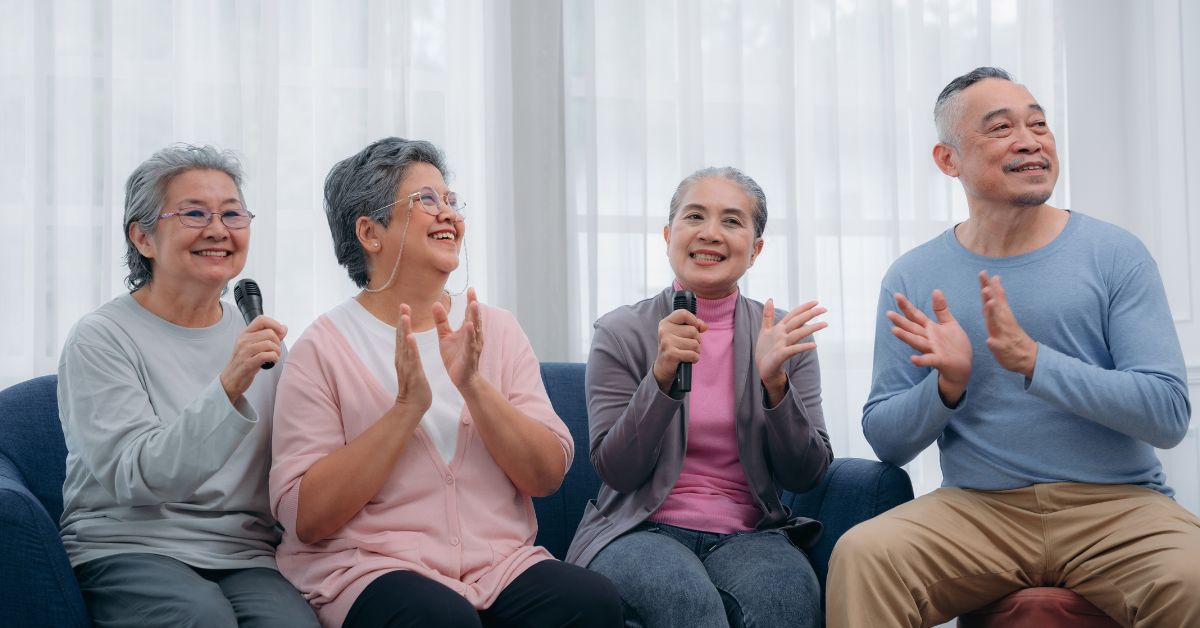
Singing Circle at Heritage Elm Grove
Social singing circles transform isolation into belonging through neurobiology, intentional design and inclusive participation. Your community can launch these circles by prioritizing proximity over performance, familiar melodies over complexity and guidance over entertainment. The results speak for themselves: residents who rarely vocalize suddenly sing entire verses and connections form across cognitive abilities. Experience a Social Singing Circle firsthand at Heritage Elm Grove by calling (262) 786-5800 to schedule your visit today.
Schedule a visitFAQs
Q1. How is a social singing circle different from a typical sing-along activity?
A social singing circle is designed to encourage connection and participation rather than performance. Instead of having a performer at the front while residents watch or listen, participants sit in a circle and interact. The facilitator’s role is simply to guide the activity, not perform for the group. This setup encourages everyone to take part—whether by singing, clapping, using simple instruments or moving along with the rhythm.
Q2. Can assisted living residents with memory loss still participate in singing circles?
Yes, many assisted living residents with memory loss can still enjoy and participate in singing circles. Even when memory or communication becomes more difficult, familiar songs often remain stored in long-term memory. Because music activates multiple areas of the brain, residents may remember lyrics, hum along, clap to the rhythm or simply enjoy the shared experience. These activities help residents stay engaged, stimulate memory and create meaningful moments of connection with others in the community.
Q3. Why does group singing help residents feel more connected to each other?
Singing together naturally encourages social bonding. When people participate in group singing, the brain releases oxytocin, a hormone linked to trust and social connection. Music also activates several areas of the brain at once, including those related to emotion, memory, movement and sound. When everyone follows the same rhythm and melody, it can create a shared sense of timing and energy.