
What does compassion look like when it shows up every single day? Assisted living in Wisconsin has taught us that real connection happens during ordinary Tuesday afternoons, not just holiday celebrations. It lives in the caregiver who remembers your mother prefers her coffee with two sugars and the resident who saves a seat for your father at the morning news discussion.
The most successful assisted living experiences happen when communities prioritize emotional support alongside physical care, creating environments where seniors don’t just receive services but truly belong to a caring community.
This blog shows that real connection in assisted living in Wisconsin happens daily through compassion, not just events. Staff use empathy-focused training and routines to build bonds. Shared dining and volunteering fight isolation, ensuring seniors thrive and truly belong.
How do Assisted Living Communities Ensure Compassion and Connection are Celebrated Not Just During Holidays?
Quality assisted living communities understand that meaningful connections can’t be scheduled like a holiday party. It happens when staff know Mrs. Johnson gets anxious before dinner or when they remember that Mr. Peterson lights up talking about his grandchildren. These communities have built specific practices that make compassion part of their daily rhythm.
Daily team communication rituals
Effective communities use regular morning huddles to ensure continuity of care. The goal is simple: to share small but vital details—mood shifts, recent concerns or moments of joy—that happened between shifts. When every team member knows that a resident prefers a specific seat or needs extra emotional support that day, care shifts from task-focused to personalized. This ensures nothing is lost during shift changes, allowing the team to anticipate needs and provide seamless, compassionate service.
Empathy-focused training for staff
The best care programs focus intensely on empathy and active listening. Staff receive training rooted in research, understanding that nonverbal cues (like patient eye contact or a gentle touch) are often the most powerful form of communication. Caregivers learn practical techniques to give their full attention, listen for underlying feelings and reflect back what they hear to ensure deep understanding. This commitment to cultural understanding and authentic connection fosters better teamwork and, crucially, happier residents.
What Activities or Programs Best Encourage Resident-to-Resident Compassion in Assisted Living?
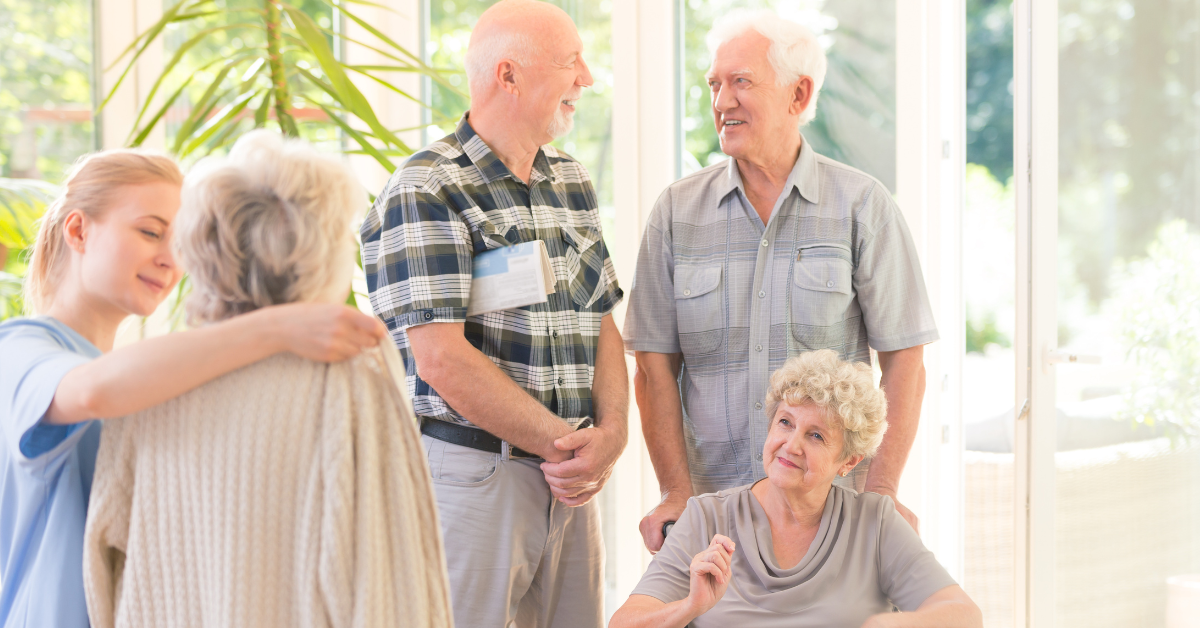
Real friendship doesn’t happen because staff schedule it. The strongest connections between residents grow from shared experiences that feel natural and meaningful. Communities that understand this create space for authentic relationships to bloom.
Group volunteering and charity drives
Purpose brings people together like nothing else can. When residents work side by side—hosting birthday celebrations, crafting decorations or organizing holiday events—they create shared experiences that transcend superficial interactions.
Some communities partner with local organizations for charity drives and outreach efforts. These collaborations give residents meaningful ways to use their skills while forming bonds through shared purpose.
Shared dining and themed meal nights
Mealtime offers more than nutrition—it’s where stories get told and friendships deepen. Research suggests that seniors who dine together experience reduced loneliness and improved mental health (Middleton et al., 2022). Themed meal nights turn ordinary evenings into celebrations that spark conversation and build community.
These special dinners create atmosphere through decorations, costumes and diverse menus that invite residents to share their own stories and traditions. Restaurant-style dining setups encourage exploration of new flavors while creating natural opportunities for social connection that fight isolation.
A Place to Flourish
Connection changes everything. That’s what this year has taught families and communities across Wisconsin about assisted living. The difference between a place that provides services and a home where people flourish comes down to relationships—the kind built one conversation, one shared meal, one moment of understanding at a time. Ready to schedule a tour of Heritage Senior Living? Call (844) 658-4475 to know more about our wellness approach at our assisted living community.
FAQs
Q1. How long does it usually take to adjust to assisted living?
It really depends on the person, but most people take around three to six months to fully settle into assisted living. Some adjust faster, especially if they’re naturally social or excited about the change, while others may need a bit more time. The adjustment process often goes more smoothly when there’s strong family involvement, friendly staff support and many opportunities to connect with other residents.
Q2. How do assisted living communities help residents build connections?
Assisted living communities put a lot of thought into helping residents feel connected and engaged. They often have programs like peer mentoring for newcomers, group volunteering and themed dinners that bring people together. Shared dining and fitness classes make it easy to meet new friends and create a genuine sense of belonging.
Q3. How can families tell if an assisted living community truly values emotional connection?
When visiting a community, pay close attention to how the staff interacts with residents — are they kind, patient and genuinely interested in conversations? That’s a great sign. You can also ask about staff training in empathy and communication, how resident feedback is handled and what types of social or emotional wellness programs are offered. And of course, notice how the residents themselves seem — if they look happy, comfortable and engaged, that’s usually the best indicator of a caring environment.