


Wondering what is memory care and if it’s time? You are not alone in this. So many families reach this exact moment scared, exhausted and quietly wondering if they’re making the right call.
Memory care is a type of senior living built specifically for people with Alzheimer’s disease or other forms of dementia. It goes well beyond basic assistance. Think of it as a place where every detail, the daily routines, the staff training, the layout of the building is designed around one goal: helping your mom feel calm and like herself.
This guide will walk you through what memory care actually looks like, how to know if it’s the right fit and what to expect along the way. Communities like Heritage Elm Grove exist to make this transition feel less like a loss and more like a next step toward the care she truly deserves.
Do You Want To Learn More About Memory Care
What Is Memory Care And Why Might Mom Need It Now?
Memory care is a type of residential community built specifically for people living with Alzheimer’s or other forms of dementia. That distinction matters more than it might seem. This isn’t just senior living with a locked door. Every part of how these communities are designed, the daily schedule, the staffing, even the layout of the hallways, is built around how a person with memory loss actually experiences the world.
Here’s what that looks like in practice:
- Staff trained specifically in dementia care — not just general senior care. They know how to respond to confusion, restlessness and behavioral changes with patience rather than frustration.
- Structured daily routines that reduce anxiety by making each day feel predictable and familiar.
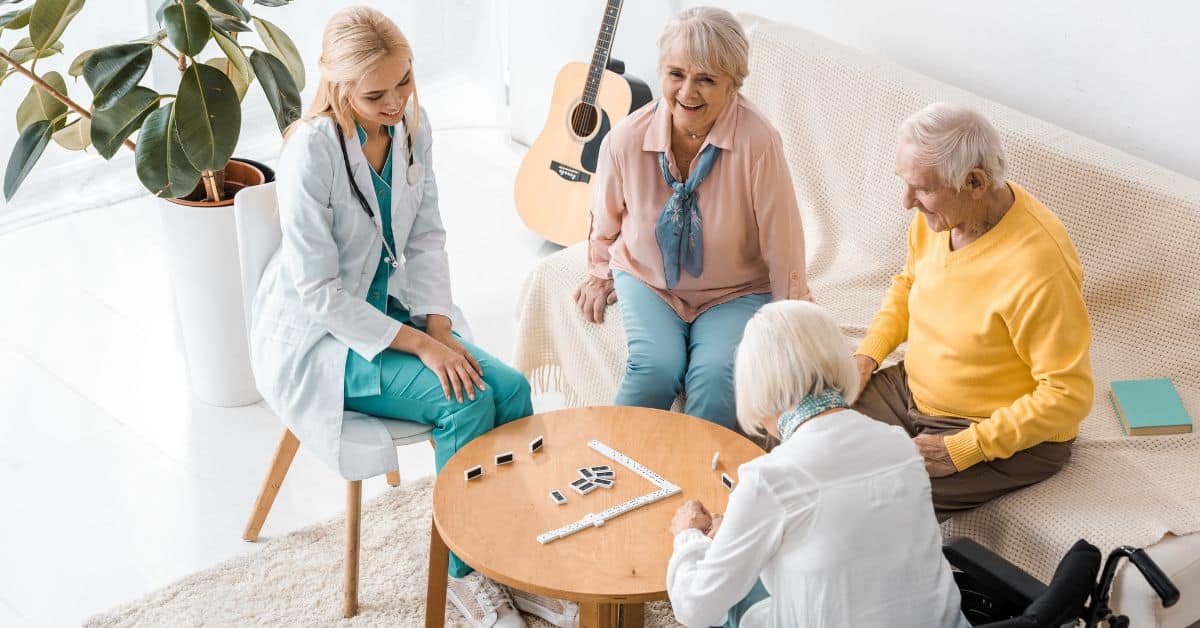
- Therapeutic activities — music, art, memory-based programs — are designed to meet residents where they are cognitively, not where they used to be.
How Is Memory Care Different From What She Has Now?
If Mom is currently in assisted living or still at home, you might wonder whether a move is really necessary. It’s a fair question and the honest answer depends on what she needs right now.
Assisted living does a lot of good things. It helps with bathing, dressing and meals. But it’s designed for people who need some support, not constant supervision. When dementia is in the picture, the needs shift significantly.
Memory care adds layers that standard care simply doesn’t offer:
- Staff receive dementia-specific training to handle behaviors like agitation, exit-seeking and sundowning
- Check-ins happen throughout the day and night — not just during scheduled care visits
- The physical environment is intentionally designed to reduce disorientation, with color-coded areas, clear visual cues and memory boxes outside residents’ doors
- Staff-to-resident ratios are higher because people with dementia need more one-on-one attention
Who Actually Lives In Memory Care?
It might help to know you’re far from the first family to reach this point.
The average person moves into memory care at age 84. Most people stay for roughly two years, though that window varies depending on when families first recognize the signs.
The people who thrive in memory care typically share a few things in common:
- They need step-by-step help to get through everyday tasks
- They’re frequently confused about where they are or what day it is
- Wandering has become a real concern
- Personality or behavioral changes have made caregiving at home unsustainable
Why Memory Care Makes Such A Difference

How Does Specialized Care Actually Help Her?
Research shows that specialized dementia care reduces distress expressions, eases depression (Kim & Park, 2017) and improves overall quality of life. Staff trained in person-centered approaches know how to communicate when words fail, how to redirect confusion without triggering frustration and how to preserve her dignity even on the hardest days.
The structure itself is part of the care. Consistent daily routines help reduce anxiety because her brain doesn’t have to work as hard to figure out what comes next. Music therapy, art therapy and reminiscence activities aren’t just ways to fill the afternoon. They’re evidence-based approaches that help maintain emotional connection and cognitive engagement.
You’ve Already Done Something Brave
Choosing memory care for your mom isn’t giving up on her. It’s choosing to give her something you can’t always provide alone: round-the-clock support and a team that understands exactly what she’s going through. That’s not failure. That’s love in action.
Heritage Elm Grove is here for families exactly like yours, not to rush you, not to pressure you, but to answer your questions and help you feel confident in whatever comes next. When you’re ready to take that next step, call (262) 786-5800. A real conversation, no obligation, just support.
FAQs
Q1. When should someone with dementia transition to memory care?
Memory care becomes necessary when cognitive decline creates risks that standard care can’t address. This typically happens when someone repeatedly forgets medication, wanders outside unsupervised, leaves appliances on or experiences confusion that interferes with daily independence. Most people move into memory care around age 84, when behavioral changes and safety concerns require the specialized supervision that memory care provides.
Q2. How does memory care differ from regular assisted living?
Memory care provides specialized dementia training for staff and higher staff-to-resident ratios. The communities feature color-coded hallways, clear signage and enclosed outdoor spaces designed specifically for cognitive impairment. While assisted living helps with basic daily tasks, memory care adds constant supervision, behavioral management expertise and therapeutic activities tailored to residents’ cognitive levels.
Q3. What should families look for when touring memory care communities?
During tours, ask about staff-to-resident ratios across all shifts, dementia-specific training hours and how behavioral changes are managed. Observe whether residents appear comfortable and engaged during mealtimes and activities. Check for fresh environments and clear signage. Request to see recent state survey reports and inquire about family communication protocols for health changes or incidents.