
Music holds extraordinary power for seniors living in memory care apartments in Pewaukee, WI, especially when other cognitive abilities begin to fade. Nostalgic songs act like keys, opening doors to precious moments from the past and stirring emotions that seemed lost forever. People with dementia often surprise their families when they remember every word to a favorite song, even when they struggle to recall recent conversations.
This Valentine’s music serves as a bridge when traditional communication becomes challenging, allowing families to reach their loved ones through the universal language of melody and helping preserve emotional connections despite cognitive decline.
Heritage Court Waukesha provides compassionate, individualized care around the clock and music therapy has become a cornerstone of our approach to resident well-being. Nostalgic music can temporarily unlock memories that dementia typically keeps hidden, giving families precious moments of recognition and connection with their loved ones.
How Does Nostalgic Music Help Seniors Reconnect In Memory Care Apartments?
Familiar melodies become bridges to places that seemed unreachable. For seniors with dementia, these musical pathways often remain open even as other doors close. Music works differently in the brain—it spreads across multiple regions at once, creating connections that bypass damaged areas.
Why seniors can sing even when they can’t speak
You might witness something that seems impossible: your loved one struggles to remember your name, yet sings every word of “Moon River” without missing a beat. This isn’t magic—it’s neuroscience. Singing uses completely different brain circuits than regular conversation. Dr. Scott Kaiser puts it simply: “Music therapy can help people express themselves through song… as patients utilize neural pathways more heavily engaged during singing, they can ultimately improve their ordinary speech” (PNI, 2023).
The role of music in restoring identity and self-awareness
Songs carry more than melodies—they have stories. When memory care residents hear familiar tunes, they don’t just remember the music; they also feel it. They remember dancing at their wedding, singing lullabies to their children or the radio playing during their first job. Musical memories contain richer emotional details than memories recalled without music.
Neurological benefits of music for Alzheimer’s patients
Music therapy does more than comfort—it actively helps the brain. Studies document improvements in global cognition, autobiographical memory, executive function and psychomotor speed among people with Alzheimer’s disease.
Here’s what happens: music awakens brain regions and neural pathways that dementia often leaves dormant. Structured music therapy programs consistently enhance cognitive function in older adults with dementia. These benefits don’t end when the music stops, either.
What Makes Valentine’s Day The Perfect Time For Musical Memory Care?
Valentine’s Day creates something special for families dealing with memory loss. The holiday celebrates love and connection—exactly what music does best for couples facing cognitive challenges. This timing gives families a meaningful way to connect through memory care settings when words alone might not be enough.
How couples in memory care bond through familiar melodies
Something beautiful happens when couples share musical moments in memory care apartments. By listening to music, they can recharge their memories and feel better; they can go back to good moments in their lives… and feel love in a few moments.

How To Build A Personalized Valentine’s Playlist For Memory Care
Building a personalized Valentine’s playlist opens doors to connection when words fall short. The songs you choose can become bridges between you and your loved one, creating moments of recognition that feel like small miracles.
Choosing songs from the residents’ memory bump (ages 15–25)
Your loved one’s teenage years hold the key to their most memorable musical moments. People best recall popular music from their teenage years, specifically between ages 13 and 19 (Rao et al, 2021). This “reminiscence bump” period creates our strongest emotional connections to music. Songs from this formative era provide the richest source of retained music memories for people living with dementia.
Tips for working with therapists to select meaningful tracks
Music therapists become your partners in this process, helping you notice what others might miss. Consider these approaches:
- Spend 30-60 minutes sampling different songs, observing reactions like finger-tapping, eye contact or spontaneous smiling
- For non-verbal residents, watch body language closely as you play potential selections
- Include music tied to significant moments—weddings, achievements or cultural celebrations
- Start small with quality selections, gradually building toward a robust playlist of 150+ songs
Examples of genres that work well: jazz, rock, soul
Jazz often captures attention with its complex rhythms and harmonies, stimulating the senses. Popular music from the 1960s-70s resonates strongly with many current memory care residents. Religious music can be particularly effective for those with strong spiritual connections. Don’t overlook movie musical soundtracks—they encourage engagement and participation in sing-alongs.
Play Your Favorite Songs This Valentine’s
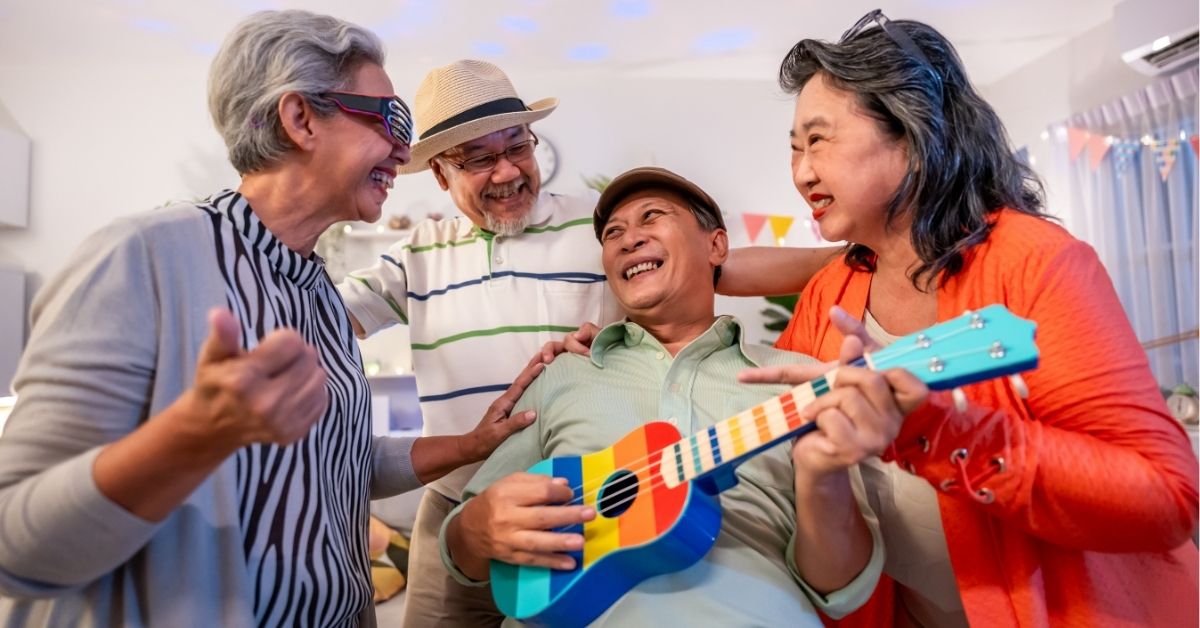
Music creates bridges where words build walls. Families watching their loved ones drift away with dementia often find something magical happens when familiar songs fill the room – eyes brighten, fingers start tapping and for precious moments, the person they remember comes back.
We don’t need complex science to understand what our hearts already know. Music reaches parts of our loved ones that remain untouched by cognitive decline. Valentine’s Day simply permits us to lean into this gift, to let melodies do the talking when conversations become difficult.
Heritage Court Waukesha recognizes music’s healing power. Call (262) 542-3434 to learn how our programs weave melodies into daily care, creating environments where residents feel valued and connected.
FAQs
Q1. How can music help seniors with dementia reconnect on Valentine’s Day?
Familiar music activates emotional and memory pathways, helping seniors feel comforted, engaged and connected—even when words are hard to find.
Q2. What types of songs work best for memory care residents?
Music from ages 15–25 works best, especially songs tied to love, youth and significant life moments, because these memories are the most deeply stored.
Q3. How can you tell if music is helping?
Positive responses include tapping feet, swaying, smiling, relaxed body language or increased eye contact—simple signs that the music is reaching them.