

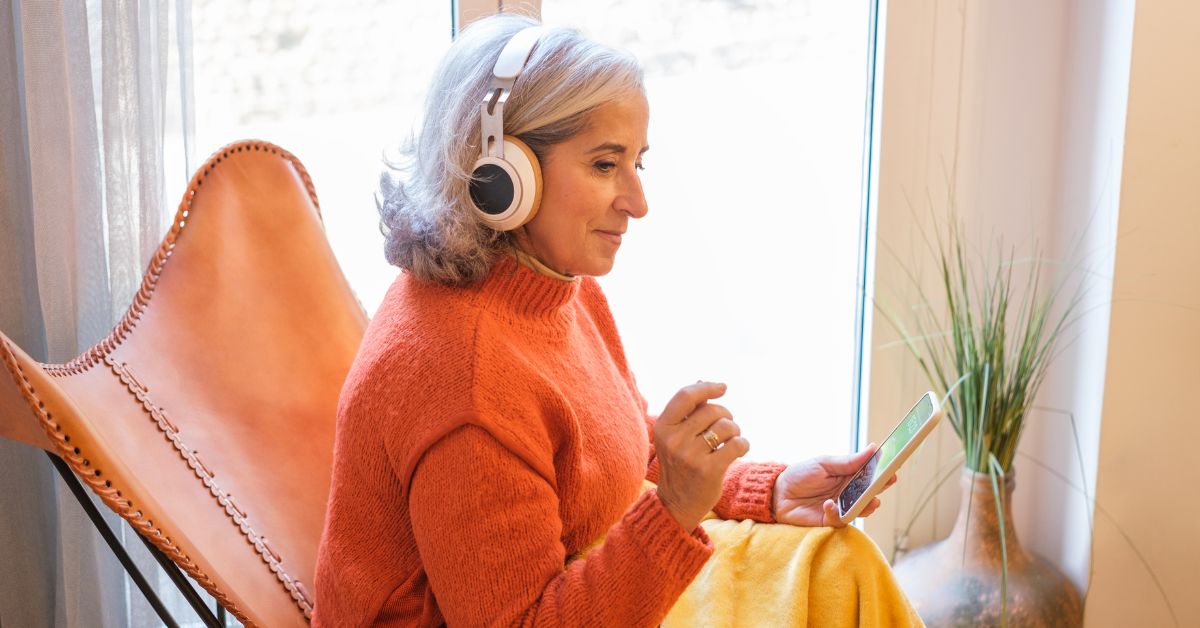
When conversations with loved ones at dementia care communities in Menomonee Falls become harder, music opens doors that words cannot. Apps like SingFit help families find new ways to connect during visits, even when dementia changes how we communicate.
Music memories, helpful technology and caring staff create visits where songs do the talking. These moments give families a way to stay close when words fall short.
Discover how SingFit transforms dementia care visits in Menomonee Falls, WI. By leveraging musical memory, this innovative app helps families bypass communication barriers. Use therapeutic music to spark cognitive engagement, reduce anxiety and nurture deep emotional connections when words alone are no longer enough.
Why is Music So Effective for Seniors With Alzheimer’s at Dementia Care Communities Compared to Just Talking to Them?
Watching someone you care about struggle with words during visits can feel heartbreaking. You want to connect, but traditional conversation becomes a minefield of forgotten names and lost thoughts. Music offers something different—a pathway that doesn’t rely on recent memory or perfect recall.
Learn More About Our Care OptionsYour loved one’s musical memories stay strong
Here’s what gives families hope: the brain holds onto musical memories with remarkable tenacity. Even as Alzheimer’s affects other cognitive abilities, brain areas underlying musical memory are among the last to show atrophy (Clark & Warren, 2015). This explains moments that might surprise you—your mother, who can’t remember what she ate for lunch, singing every verse of “White Christmas” with perfect clarity.
Why familiar songs light up the brain
When your loved one hears a song from their past, something remarkable happens. Multiple brain networks activate simultaneously—the visual network, salience network, executive network and cerebellar networks all spring to life with significantly higher connectivity than during quiet moments. These are brain regions that often remain relatively intact despite cognitive changes.
Understanding SingFit’s Features: Technology That Serves Connection
The SingFit STUDIO Caregiver app brings music therapy principles directly to your fingertips during visits at memory care communities in Menomonee Falls, WI. Music therapists designed this platform with one goal: removing the barriers that often prevent families from using therapeutic music effectively with their loved ones.
Songs that match their story
SingFit’s algorithms look at your loved one’s age, health condition and therapeutic goals to select appropriate songs from over 700 curated tracks. This personalization works because the music someone heard between the ages of 10 and 25 creates their strongest neural connections. You don’t need to become a musical historian. The system takes their birth year and preferences, then generates playlists featuring artists.
Each playlist serves a purpose, whether calming anxiety, sparking reminiscence or encouraging social engagement. The technology adapts selections based on cognitive and psychological needs, meeting your loved one exactly where they are in their journey.
Words they can follow
SingFit’s most powerful feature displays lyrics just before they appear in the melody. This visual cue allows participation without demanding memory recall or reading skills. You control the volume of both the guide lyrics and the guide singer, adjusting support based on how much help your loved one needs in that moment.
Adapting to their pace
The app includes a tempo slider that adjusts song speed to match speech and motor abilities. This matters especially for residents whose conditions affect verbal fluency. Recording features capture these singing sessions, creating precious memories that extend far beyond your visit.
Insights that build better visits
The app tracks engagement levels, mood responses and participation patterns. This feedback helps Heritage Court memory care staff and families discover which songs create the strongest connections, building better visit routines over time. The app works on iOS and Android, requiring no special training to start using.
These features work together to create something deeper than entertainment – they provide a pathway back to the person you remember, even when words become difficult to find.

The Power of Music
Music creates pathways to connection that conversation cannot reach when cognitive decline progresses. SingFit transforms these neurological realities into accessible technology that any family member can use during visits. Active singing through the app produces measurably better outcomes than passive listening, particularly when integrated into consistent routines at memory care communities. Contact Heritage Court Menomonee Falls at (262) 781-6930 to schedule a tour.
Schedule a visitFAQs
Q1. Why does music often work better than conversation for someone with Alzheimer’s?
Music is able to reach parts of the brain that Alzheimer’s affects much later than language and short-term memory. In many people with Alzheimer’s disease, the brain areas responsible for musical memory remain accessible even as other cognitive abilities decline. That’s why someone might struggle to remember names or recent events but can still sing songs they learned decades ago. Music also activates multiple areas of the brain at once, which helps engage memory, emotion and attention in ways that simple conversation sometimes cannot.
Q2. Is singing along more helpful than just listening to music for people with dementia?
Yes, active participation—like singing along—tends to be more beneficial than passive listening. When people sing, they engage their brains more deeply because they’re recalling lyrics, following rhythm and using their voice at the same time. Active music engagement can lead to greater improvements in mood, cognitive function and behavioral symptoms compared to simply listening to music. In short, singing encourages stronger mental stimulation and emotional connection.
Q3. What does the SingFit app do for people with dementia?
The SingFit app is designed to make music therapy more engaging for people with dementia and their caregivers. It offers personalized playlists with hundreds of familiar songs, along with lyric prompts that display the words right before they appear in the melody to help users follow along. The app also allows adjustments to song tempo and includes recording features so caregivers can track participation. Over time, it can help identify which songs create the strongest engagement or positive mood responses for each individual.