Choosing assisted living in Hartland, WI, means choosing more than a new address. You’re making a decision that could add years to your life and life to your years. Social isolation raises your risk of premature death, but communities like Heritage Lake Country create the opposite effect—they build protective networks around your heart.
Choosing assisted living isn’t just about housing—it’s a proactive decision to surround yourself with the heart-protecting power of daily friendship and meaningful connection.
Your cardiovascular health deserves this kind of intentional community. The question isn’t whether you need social connection for heart health—the science has settled that. The question is: where will you find the meaningful relationships your heart needs to thrive?

How Consistent Social Engagement Acts Like Medicine for Your Heart in Assisted Living?
When you engage socially, your body releases a cascade of protective chemicals that shield your cardiovascular system from harm. Isolation may increase the risk of heart disease, putting it on par with smoking or high cholesterol as a significant risk factor. This means those daily chats over coffee and group activities you’ll find in assisted living communities aren’t just enjoyable—they’re medically essential.
Oxytocin: Your heart’s natural guardian
Each positive interaction triggers your body to release oxytocin, often called the “bonding hormone.” But this remarkable chemical does far more than make you feel good. Studies show oxytocin reduces oxidative stress and inflammation while enhancing psychological well-being—two critical factors in heart health (Orihashi et al, 2025).
Here’s what makes this even more encouraging: seniors actually produce more oxytocin during social interactions than younger adults. Your aging body recognizes how much it needs these connections and responds accordingly. Seniors with higher oxytocin levels consistently report greater life satisfaction, more empathy and more profound gratitude.
Three ways social connection protects your heart
The cardiovascular benefits of regular social engagement work through multiple pathways:
- Lower blood pressure: Conversations and companionship naturally reduce stress, supporting healthy circulation
- Reduced depression: Strong social ties lift your mood, which directly benefits heart function
- Better daily habits: Socially engaged people maintain heart-healthy routines more consistently
The surprising power of shared laughter
Something remarkable happens when you laugh with others. Just 30 minutes of comedy can improve arterial function by 17%, while watching a serious documentary can decrease it by 15% (Sugawara et al, 2010).
The science behind this is fascinating: laughter releases endorphins that interact directly with the lining of your blood vessels. This interaction triggers nitric oxide release, a molecule that helps relax and widen arteries, improving blood flow throughout your body. These benefits last nearly 24 hours after a good laugh.
Four Ways Assisted Living Acts as a ‘Social Bank’
Think of social connections like deposits in a bank account—the more you make, the richer your life becomes. Communities like Heritage Lake Country understand this wealth-building approach to heart health. These are five key ways to help you build social capital that pays dividends in cardiovascular wellness.
1. Communal dining with chef-prepared meals
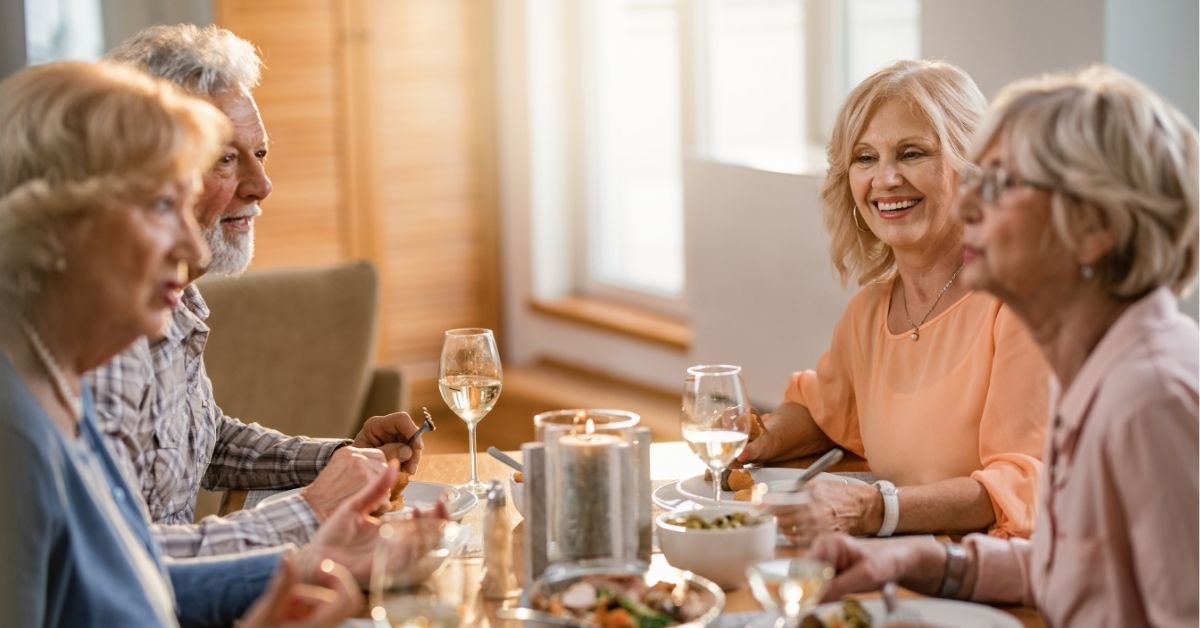
Nothing brings people together quite like sharing a meal. People who regularly share meals report higher life satisfaction and more friends they can count on. These aren’t just any meals—Heritage Lake Country’s chef-prepared dishes turn every dining experience into an opportunity for meaningful conversation.
2. Resident-led clubs and interest groups
Your passions don’t retire when you do. Resident-led clubs put you back in the driver’s seat, whether you’re organizing an art group, leading a book discussion or starting a music circle. These aren’t activities planned for you—they’re opportunities you create with others who share your interests. The leadership aspect matters deeply; it affirms that your voice, experience and vision still shape the world around you.
3. Group fitness and walking
Exercise becomes more enjoyable with company. Walking clubs that venture out to places like Nixon Park combine the cardiovascular benefits of movement with the heart-protective power of friendship.
4. On-site events that foster daily interaction
Every day offers something to look forward to—holiday celebrations, educational programs, special performances or themed gatherings. These events transform routine days into memorable moments. The beauty lies in their consistency; you’re never wondering what there is to do or whether anyone will be around to enjoy it with you.
Support Heart Health Through Connection
Your heart doesn’t distinguish between medical prescriptions and meaningful friendships—both can save your life. The evidence we’ve explored reveals a simple truth: communities like Heritage Lake Country offer something far more valuable than assistance with daily tasks. They provide the social connections that keep hearts beating stronger and longer.
The “social wealth” created through communal dining, resident-led activities, group fitness and daily interactions builds something isolation simply cannot provide: a comprehensive support system for your cardiovascular health. Each shared meal, each friendly conversation, each moment of laughter makes deposits in an account that pays dividends in extended, vibrant years.
Call Heritage Lake Country at (262) 367-2975 to schedule a tour. See for yourself how the infrastructure of friendship creates the foundation for heart health. Your cardiovascular system—and your family—will thank you for making this decision while you still can.
FAQs
Q1. How does social engagement impact heart health in seniors?
Regular social interaction lowers stress and boosts feel-good hormones like oxytocin and dopamine. This helps reduce inflammation, improve blood flow and protect the heart from disease and stroke.
Q2. How does assisted living encourage social connection?
Assisted living creates built-in opportunities to connect through shared meals, clubs, fitness classes, intergenerational programs and daily events—making socializing easy, natural and part of everyday life.
Q3. Can laughter really improve heart health?
Yes. Laughing releases endorphins and increases nitric oxide, which relaxes blood vessels and improves circulation. Even short bursts of laughter can measurably improve artery function and support heart health.