

Compassionate communication transforms daily life when seeking memory care for seniors in Eau Claire, WI. When you watch someone you love struggle with progressive memory loss, the way you connect with them matters just as much as the care they receive. Person-centered approaches in dementia care settings create genuine improvements in emotional well-being for older adults with Alzheimer’s.
Compassionate communication in memory care prioritizes emotional connection over factual accuracy, fostering meaningful relationships that enhance the quality of life for seniors with cognitive challenges.
This guide shows you how compassionate communication builds real connections with seniors experiencing memory impairment. You’ll learn practical ways to speak with both clarity and kindness, listen in ways that actually reduce stress and help create environments where everyone feels supported. These techniques allow you to maintain authentic relationships with your loved one, even when their cognitive abilities shift and change.

Why is Compassionate Communication Essential in Memory Care for Seniors?
When seniors face memory challenges, how you communicate often carries more weight than what you actually say. Empathetic interactions build bridges across cognitive gaps and create the emotional security that people need most. Compassionate approaches reduce agitation and improve the quality of life for both seniors and the people caring for them.
How memory care uses empathy to ease transitions
Empathy serves as a therapeutic tool (Sim et al., 2023) in dementia care settings, creating close and effective communication while giving residents a sense of stability. Retirement communities understand that empathy allows residents to express emotions freely, experience self-worth and reduce stress. This approach preserves human dignity and honors what older adults with dementia can still do.
Why is emotional tone more important than facts
Your emotional tone weighs more than factual content when you interact with someone experiencing memory loss. Person-centered communication increases resident engagement, while controlling communication reduces participation.
How seniors interpret body language and facial expressions
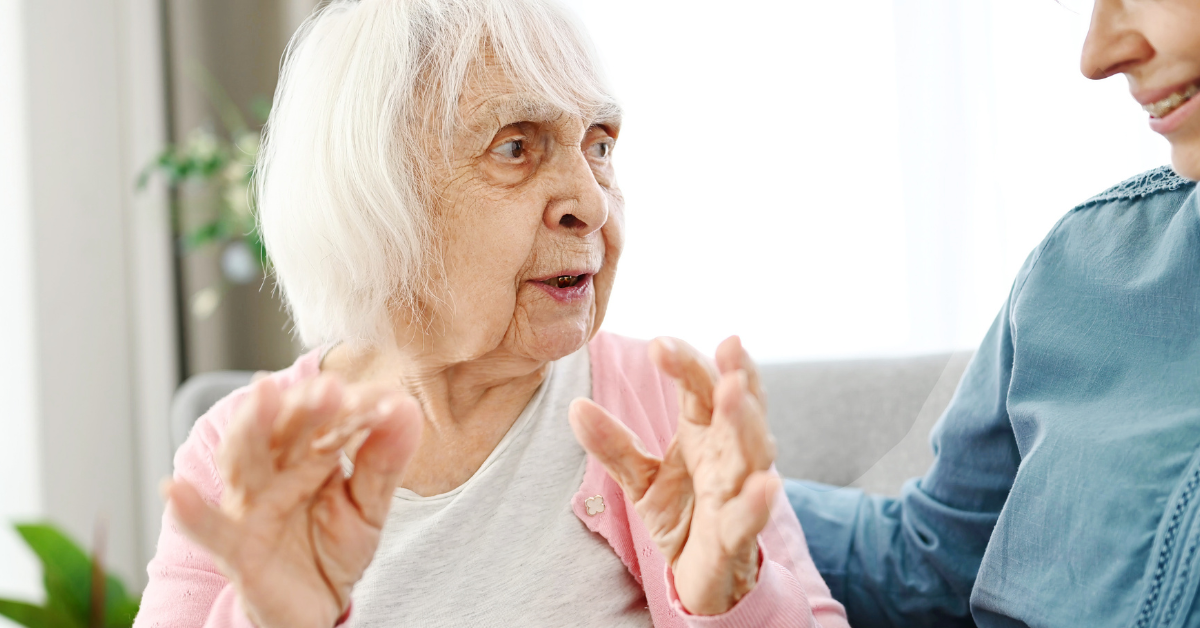
Non-verbal communication becomes increasingly important as verbal abilities diminish—eventually becoming the primary way a person with dementia communicates. Facial expressions, body language and gestures send powerful messages about emotions and intentions. Key considerations include:
- Your body language and facial expressions must align with your spoken words, since inconsistencies create distress
- Standing too close or looming over someone feels intimidating; stay at eye level
- Sudden movements or tense facial expressions can upset residents, even when your words sound positive
- Visual cues and appropriate gentle touch offer reassurance
What Listening Techniques Reduce Stress for Seniors With Dementia?
Trust starts with truly listening to seniors experiencing memory loss. Dementia care communities in Eau Claire, WI, have learned something important: how you listen carries just as much weight as the words you choose to say.
What is active listening and how does it help?
Active listening means showing up completely—with your eyes, your ears and your heart focused on understanding what someone is trying to tell you. This approach creates something precious: the feeling of being heard and valued. Caregivers who practice active listening often notice subtle signals that might otherwise go unnoticed—signs of discomfort, sadness or even physical pain.
How to avoid ‘waiting to speak’ syndrome
Most of us have been guilty of this at some point. While someone talks, we’re already planning our response, missing much of what they’re actually trying to communicate. This habit creates barriers, especially when cognitive processing takes extra time.
Here’s what works better:
- Give your full attention to their message before thinking about what you’ll say next
- Wait patiently for them to finish—rushing conversations helps no one
- Remember that meaningful exchanges can’t be hurried
How to listen without interpreting or judging
The urge to correct or interpret runs strong when someone shares stories that don’t align with facts. Yet judgment closes doors that acceptance keeps open. Validation Therapy teaches us to step into their world instead of pulling them into ours. Trying to correct someone with dementia typically increases their distress, while validation actually reduces stress. This doesn’t mean abandoning truth—it means recognizing that their emotional truth matters more than factual accuracy in that moment.
The Power of Connection
The person you love is still there. Memory impairment shifts how they experience the world, but it doesn’t change their need to feel connected and cared for. Your willingness to meet them where they are becomes a gift that enriches both your lives.
Remember this as you make decisions about memory care: the way you communicate creates the foundation for every interaction that follows. These moments of understanding and connection become precious for everyone involved, proving that love finds a way to express itself even when words become difficult. Looking for a memory care community? Contact us at (715) 831-8200 to schedule a tour of Heritage Court Eau Claire.
FAQs
Q1. What’s the best way to communicate with someone who has dementia?
Keep things simple and calm. Gentle body language, eye contact and a reassuring tone can make a big difference. Speak slowly, use clear and familiar words and give them time to respond. Creating a comfortable, familiar environment also helps them feel comfortable and more at ease during conversations.
Q2. What should I avoid saying or doing when talking to a loved one with dementia?
Try not to argue, correct them or test their memory by asking questions like, “Don’t you remember?” Avoid talking down to them or speaking as if they aren’t there. Instead, focus on their feelings, meet them where they are emotionally and gently redirect the conversation if needed.
Q3. Why does tone matter more than facts when someone has memory problems?
Even when memory fades, emotions often stay strong. Your loved one may not remember the exact words you used, but they’ll remember how you made them feel. A warm, respectful tone builds trust and comfort, leading to more positive interactions and a better overall quality of life.